

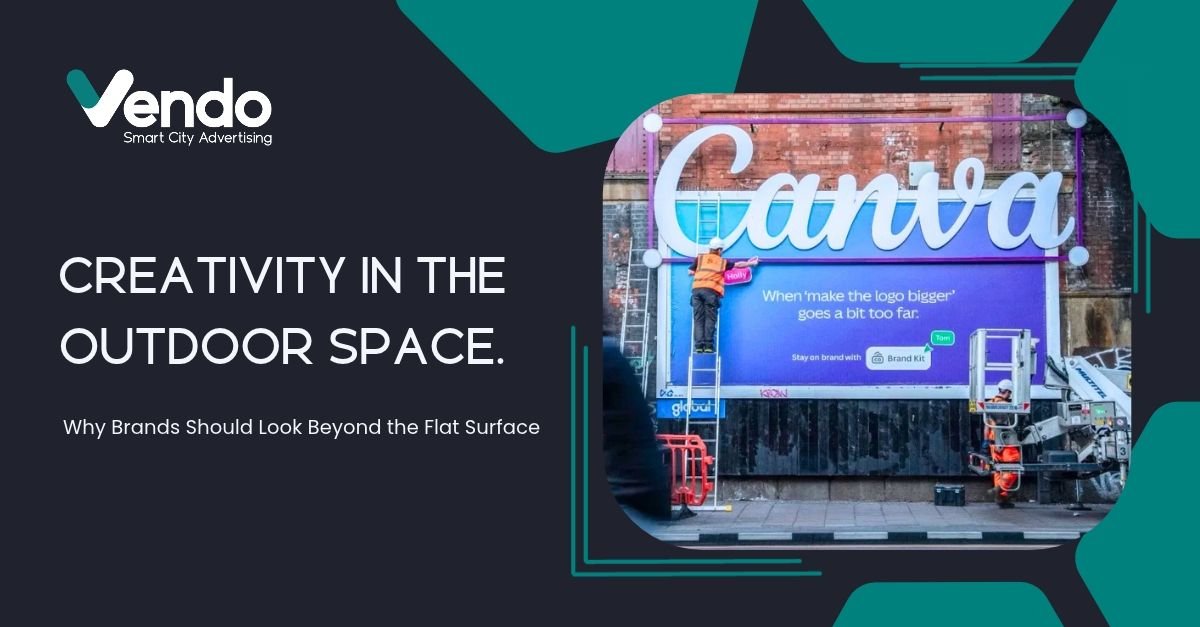
In outdoor advertising, getting noticed is important. But in a world where people encounter advertising messages almost everywhere they go, simply being visible is not always enough. Brands also need to find creative ways to capture attention, spark curiosity and make their messages memorable.
Research continues to demonstrate the importance of effective creative execution in outdoor advertising. A 2025 study by Clear Channel Outdoor and Kantar found that OOH advertising generated an average 13.3% increase in advertising awareness, compared with 10.2% for television and 3.9% for digital advertising.Clear Channel Outdoor’s 2026 research further highlighted the importance of strong creative, with 70% of the OOH campaigns analysed showing a link between creative quality and brand performance.
These findings reinforce an important point: outdoor advertising is not just about securing a visible location. The creative idea and how it is executed also matter.
Some of the most interesting Out-of-Home (OOH) campaigns achieve this by challenging the status quo of what a billboard is expected to look like or do. From physical installations to interactive digital screens and clever visual concepts, these campaigns show that outdoor advertising can be much more than a printed message on a board.
Netflix’s billboard featuring a man living inside a house-like structure is one example of this creative thinking. Rather than relying on a conventional promotional image, the brand brought its concept into the physical world, turning the billboard itself into part of the story.
But Netflix isn’t the only brand pushing creative boundaries. Across the industry, brands are finding different ways to transform ordinary outdoor placements into something worth noticing.
Here are some campaigns that demonstrate what’s possible when brands look beyond the flat surface.
Netflix: Turning a Billboard into an Experience
Netflix’s billboard featuring a man inside a house-like structure demonstrates how an advertising placement can become part of the creative idea itself.
Instead of simply displaying an image to promote its content, the brand used a physical installation to create something unexpected in an everyday environment.
The installation attracted attention from passers-by, who stopped to photograph and record the unusual setup. It also generated media coverage and online conversations, extending the campaign’s visibility beyond its physical location.
Although publicly available reports do not establish a direct increase in Netflix subscriptions or new platform users resulting from the installation, the campaign demonstrates how an unexpected outdoor execution can generate curiosity, encourage social sharing and earn additional media attention.
The lesson for other brands is to think about how their message can be brought to life. Rather than only telling people about a product or service, consider whether the billboard can demonstrate the idea in a way that people can immediately understand.
For example, a food brand could use oversized product elements, a beverage brand could create the illusion of a product spilling beyond the billboard frame, or a furniture brand could transform the advertising space into a miniature room.

BBC Dracula: Using Light and Shadow Creatively
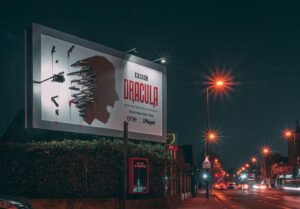
To promote Dracula, the BBC created a billboard with wooden stakes sticking out of it. During the day, it looked simple, but at night, strategically positioned lighting created a shadow in the shape of Dracula.
The campaign demonstrated how lighting and the surrounding environment could make a billboard more interesting. It also generated attention beyond the physical installation.
Reported campaign results included more than 7 million video views, approximately 43,000 social posts in relation to the activation, an estimated social reach of 22 million and coverage in more than 40 articles.
These figures show how a creative outdoor execution can extend beyond its physical location, encouraging people to share the experience and generating additional exposure through digital platforms and media coverage.
For brands, the lesson is that the environment can become part of the creative execution. Lighting, positioning and even the time of day can be used to create something that captures attention and makes an advertisement more memorable.
KitKat: Making a Point Without Saying Too Much
KitKat’s Phone Break campaign in Prague took a different approach to creativity. Rather than relying on elaborate installations, the brand used familiar outdoor advertising spaces to represent its iconic chocolate bars as smartphones being put aside for a break.
The campaign even made use of existing advertising spaces in an unconventional way to communicate the idea.
What makes this execution interesting is how closely the creative idea connects to the brand’s established message, “Have a Break.”
The campaign also delivered measurable results. According to VML, the agency behind the execution, the campaign generated approximately 3.8 million social media impressions and an estimated media value exceeding $92,525.59. It also used more than 100 existing outdoor advertising spaces without additional OOH media spend.
The campaign’s participation element proved equally effective. The initial allocation of rewards, intended to last two weeks, was exhausted within just two days, prompting the brand to provide an additional 110 reward packs.
This demonstrates how a simple but relevant creative idea can encourage participation, generate online conversations and extend the reach of an outdoor campaign without necessarily requiring a large additional media budget.
The lesson for brands is that creativity doesn’t always require a massive production budget. Strong research, outside-the-box thinking and a team that can execute can make all the difference.

Canva: Turning Billboards into a Creative Showcase
One great example of this is Canva’s takeover of London’s Waterloo billboard gallery, created in partnership with Stink Studios.
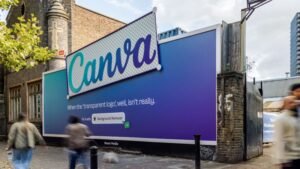
Instead of using billboards simply to display advertisements, Canva turned all 14 billboards into a playful showcase of its design tools.
The campaign brought familiar design experiences to life in unexpected ways. One billboard featured an oversized Canva logo extending beyond its frame, playing on the common request to “make the logo bigger.” Another used the wrong orientation to highlight Canva’s Magic Resize tool, while a 3D Forest e-bike appeared as though it had been dragged and dropped straight onto a billboard. Other executions played with background removal and the creative process itself.
What made this campaign stand out was how each idea connected back to what Canva actually does. The installations were fun to look at, but they also helped people understand the product without lengthy explanations.
Canva’s wider growth also demonstrates the scale of the brand’s success. The company reported reaching 260 million monthly users in 2025.
While these figures cannot be directly attributed to the Waterloo billboard campaign, they provide context for the company’s wider brand growth. The Waterloo execution itself demonstrates how outdoor advertising can be used to communicate a product’s value in a creative and memorable way.
What These Campaigns Teach Us About Creativity in OOH
Although these campaigns take different approaches, they share an important principle: the creative idea is built around more than simply filling a billboard with content.
They demonstrate several ways brands can rethink outdoor advertising:
-
Think beyond two dimensions. Explore physical extensions, three-dimensional elements and installations where appropriate.
-
Start with the message. The most effective creative execution is one that communicates the brand’s idea clearly.
-
Use your environment. Consider the location, surroundings and behaviour of the people who will encounter your campaign.
-
Make it relevant. Creativity should connect with the brand, its product and its intended audience.
-
Keep the idea clear. Even an elaborate execution should communicate its message quickly, especially in locations where people only have a few seconds to look.
Most importantly, creativity does not automatically mean spending more money. A well-observed insight and a clever idea can be just as valuable as a complex production.
Creativity Is Important, But Results Matter Too
While creative execution can help an outdoor campaign attract attention, brands should also consider how they measure its effectiveness.
A 2026 study by the Outdoor Advertising Association of America (OAAA) and Kochava found that audiences exposed to OOH campaigns recorded a median 20% lift in in-person outcomes and a 14% lift in digital outcomes compared with comparison audiences. These outcomes included actions such as website visits, app downloads and online registrations.
This highlights the potential of outdoor advertising to contribute to more than visibility. When supported by the right creative idea and campaign strategy, OOH can encourage audiences to take action both offline and online.
For brands, this means looking beyond the number of people who may have seen an advertisement. It is also important to consider brand awareness, social engagement, website traffic, consumer participation and purchase intent.
Looking Beyond the Flat Surface
The OOH space offers brands opportunities to do more than display messages. With thoughtful planning and the right creative approach, a billboard can become an experience, demonstrate a product, invite participation or give people a reason to look twice.
There is no single formula for creative outdoor advertising. What matters is finding an approach that suits the message, the audience and the environment.
For brands planning their next outdoor campaign, the question should not only be, “What do we want people to see?” It should also be, “How can we present this idea in a way that people will notice, understand and remember?”
Because in outdoor advertising, being visible is only the beginning. The real opportunity lies in making that visibility count.
SOURCES
1. Clear Channel Outdoor (2026). Creative quality emerges as key factor in OOH campaign performance, new analysis finds. 7 May. Available at: https://clearchanneloutdoor.com/company-news/creative-quality-emerges-as-key-factor-in-ooh-campaign-performance-new-analysis-finds/ (Accessed: 4 November 2026).
2. Lloyd, J. (2026). Why a man is living in a billboard on West Hollywood’s Sunset Boulevard. NBC Los Angeles, 6 August. Available at: https://www.nbclosangeles.com/news/local/man-living-west-hollwood-billboard-netflix-film/3926642/ (Accessed: 4 November 2026).
3. Lin, S. (2026). WeHo’s newest resident enjoys A/C, Sunset Strip views … from inside a billboard. Why is he there. Los Angeles Times, 8 August. Available at: https://www.latimes.com/california/story/2026-08-08/man-lives-inside-sunset-strip-billboard-for-netflix (Accessed: 4 November 2026).
4. Talon (n.d.). Shadow billboard advertising that brought BBC’s Dracula to life. Available at: https://talonooh.com/case-studies/shadow-billboard-advertising-bbc-dracula/ (Accessed: 4 November 2026).
5.VML (n.d.). KitKat Break Billboards. Available at: https://www.vml.com/work/break-billboards (Accessed: 4 November 2026).
6. Stink Studios (2025). UK Brand Campaign Series: Showcasing the power of Canva. Available at: https://www.stinkstudios.com/work/canva-h1-brand-campaigns (Accessed: 4 November 2026).
7. Canva (2025). A transformative year for Canva: 2025 in review. Available at: https://www.canva.com/newsroom/news/canva-2025-wrap/ (Accessed: 4 November 2026).
8. Out of Home Advertising Association of America (OAAA) (2026). OOH delivers 2x the performance lift of TV: New OAAA and Kochava study finds. 12 May. Available at: https://oaaa.org/news/ooh-delivers-2x-the-performance-lift-of-tv-new-oaaa-and-kochava-study-finds/ (Accessed: 4 November 2026).
